London Symphony Orchestra, Barbican Hall ★★★★☆
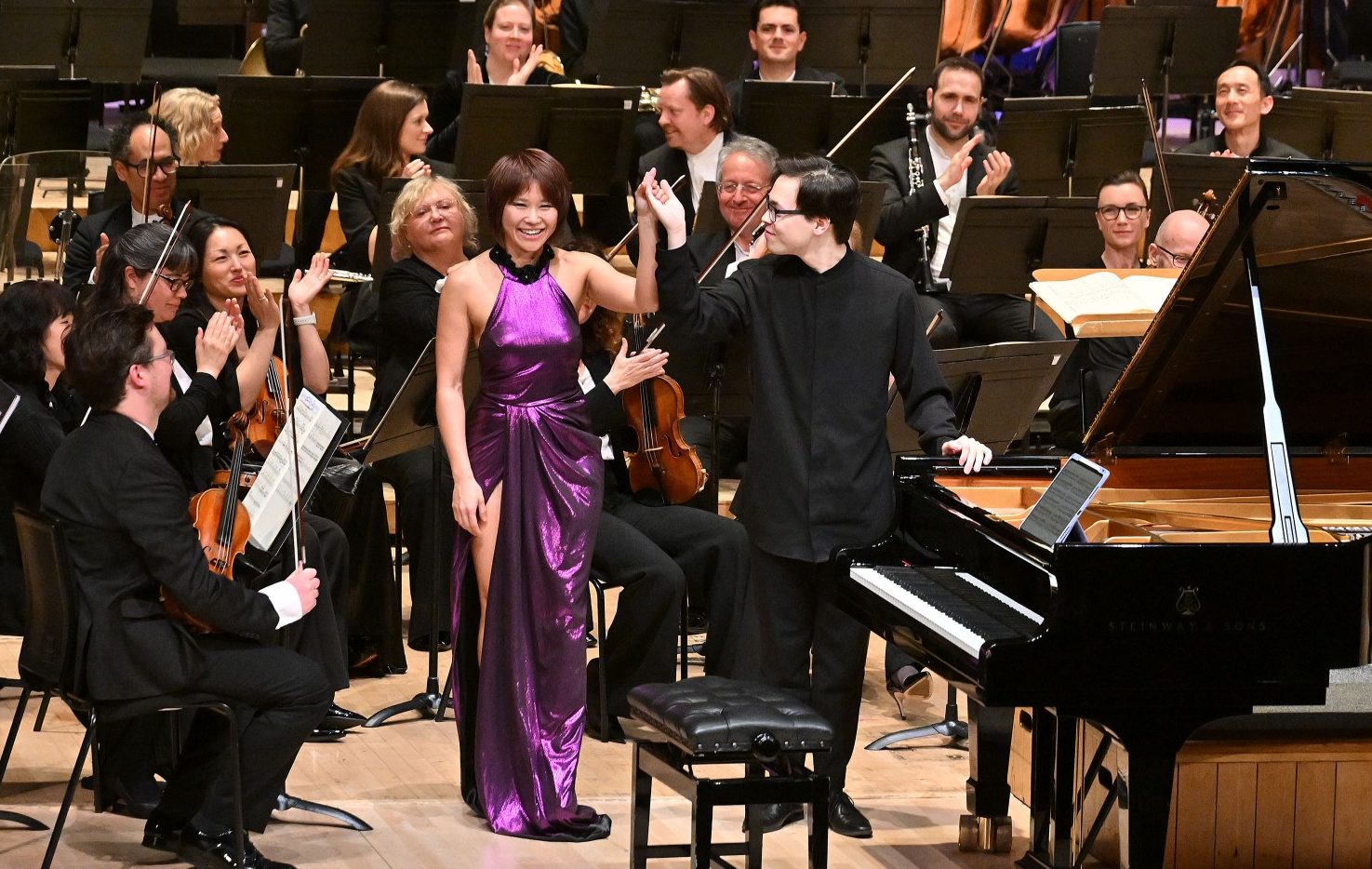
There are musicians who are forces of nature, who leave one speechless. Famed Chinese pianist Yuja Wang is definitely one of those. The 39-year-old’s performance of the wildly romantic piano concerto by Finnish composer Einojuhani Rautavaara demanded pianistic heroics that were like Liszt at his most extreme, but tinged with visionary modernist fury. Wang took it all in her stride.
The concert took place just a few days after she accused Norman Lebrecht of “derogatory misogynistic bullying”, sharing an email that the journalist and broadcaster sent her in which he accused her of not being a serious artist for withdrawing from an interview for BBC Radio 3. The station has now cut ties with him. (Lebrecht has denied the claims, stating that he “would say the same to a male artist”.)
At the Barbican, Wang’s barn-storming heroics were more than simply athletic; she made us feel the large harmonic movement underneath the tumultuous swirling, which not every performance does. She also showed a sensitive side in the slow movement of the concerto, making the melody float out from a cloud of piano figuration with the uncanny clarity of a mirage.
Afterwards, Wang played three encores, including her own arrangement of the panic-stricken second movement of Shostakovich’s 8th Quartet. It contained wrist-breaking rapid octaves that had to be heard and seen to be believed, but it was the delicately coloured Barcarolle by Finnish composer Erkki Gustaf Melartin that lingered in the mind.
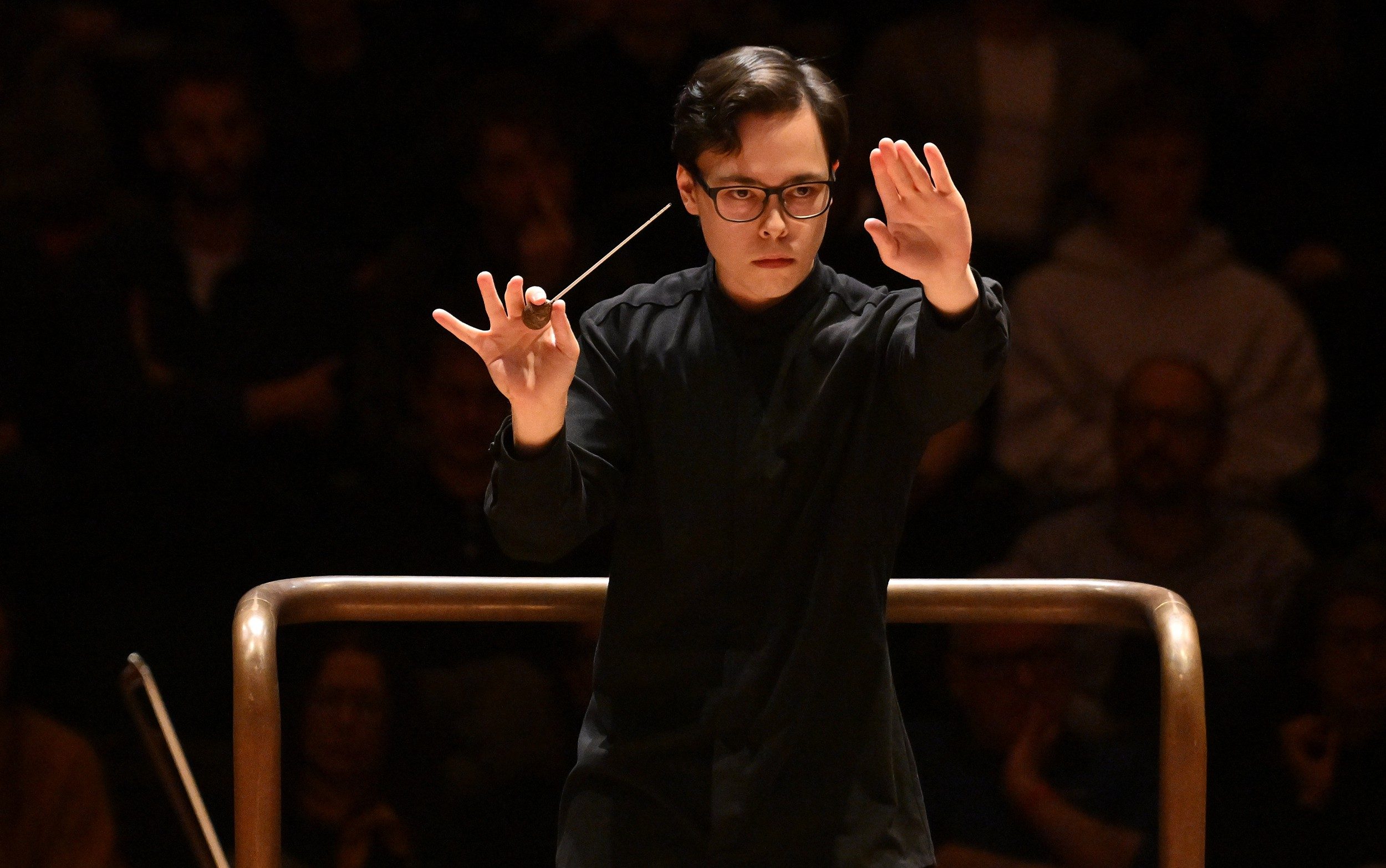
Then it was the turn of the London Symphony Orchestra to shine, under the baton of the young Finnish conductor every orchestra wants a piece of, Tarmo Peltokoski. He and the orchestra led us through the vast mythic drama of Wagner’s four-opera cycle The Ring of the Nibelung, as evoked in The Ring: An Orchestral Adventure, a 70-minute orchestral suite based on the operas by Dutch composer Henk de Vlieger. Many of the famous moments were there: The Ride of the Valkyries, Wotan’s farewell to his beloved daughter Brunnhilde, Siegfried’s Journey Down the Rhine, and the final flood and fire that destroys the corrupt world of the gods.
Without the vast time-scale of the original, and lacking those quiet, infinitely deep moments that Nietzsche said were the real secret of Wagner’s operas, the emotional impact couldn’t be deep; but the magnificence of the LSO’s performance of the set-pieces was simply overwhelming. It showed Yuja Wang wasn’t the only force of nature on that Barbican platform.
London Sinfonietta, Purcell Room ★★★★☆
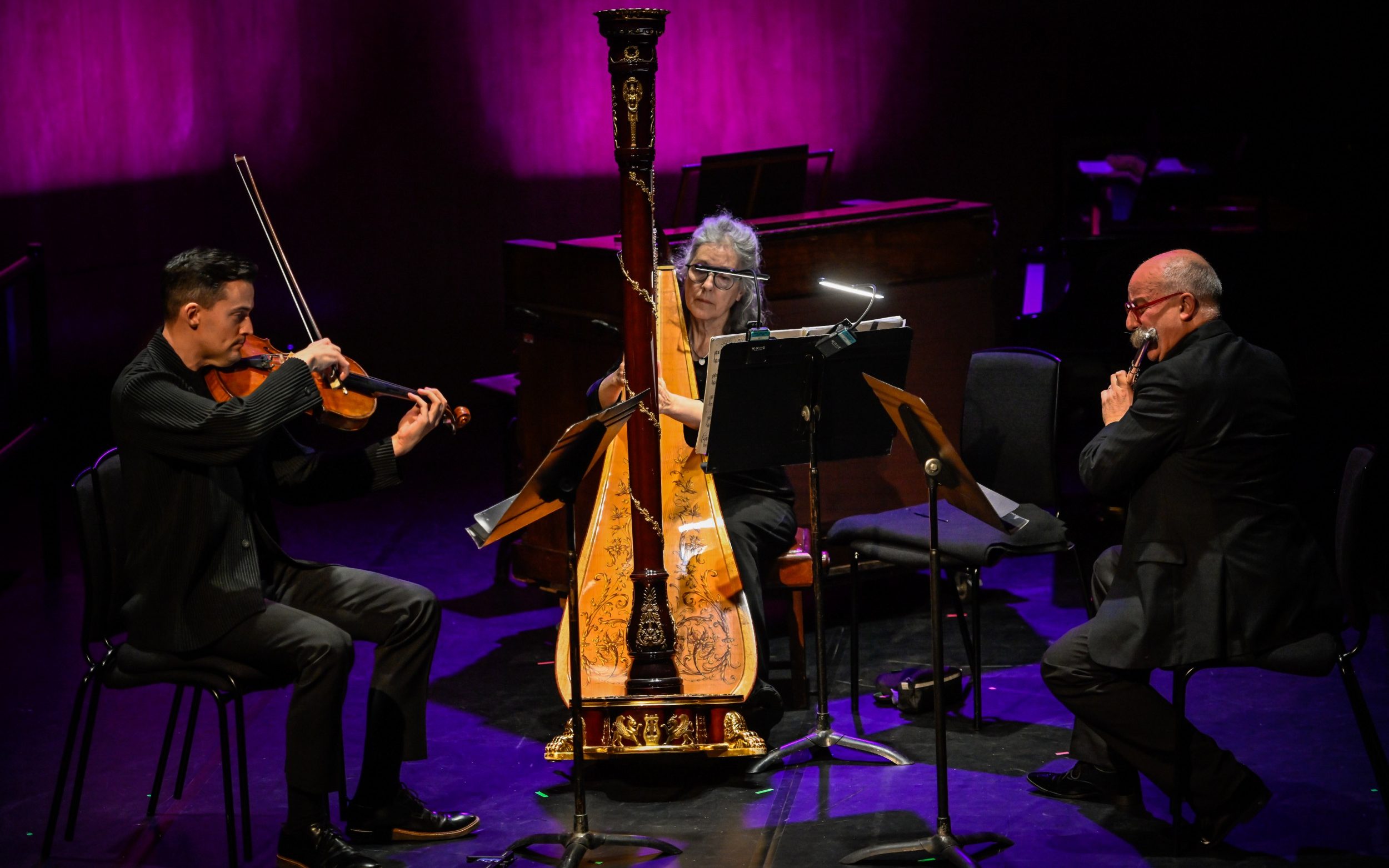
Some composers have the rare gift of naivety. They don’t impress or stir us with complexity. They simply place a luminous chord here, a sad drooping phrase there, balanced with unerring rightness. The Japanese composer Tōru Takemitsu, who died almost exactly 30 years ago, had the gift in abundance. Last night 16 musicians from the London Sinfonietta paid a beautiful, touching homage to his gentle genius, intertwining his music with pieces by three composers who shared his fascination with nature’s forms and moods.
Among the simple things Takemitsu loved was the liquid sound of the flute, which we heard much of, firstly in Claude Debussy’s orchestral evocation of a love-sick faun (Prélude à L’après-midi d’un faune), played here in a chamber arrangement. The presence of a harmonium imported the sense of a Viennese boudoir into Debussy’s shadowy forest-depths world. The flute that winds its way through that piece returned in Takemitsu’s solo flute piece Air, played with sinuous grace by Michael Cox.
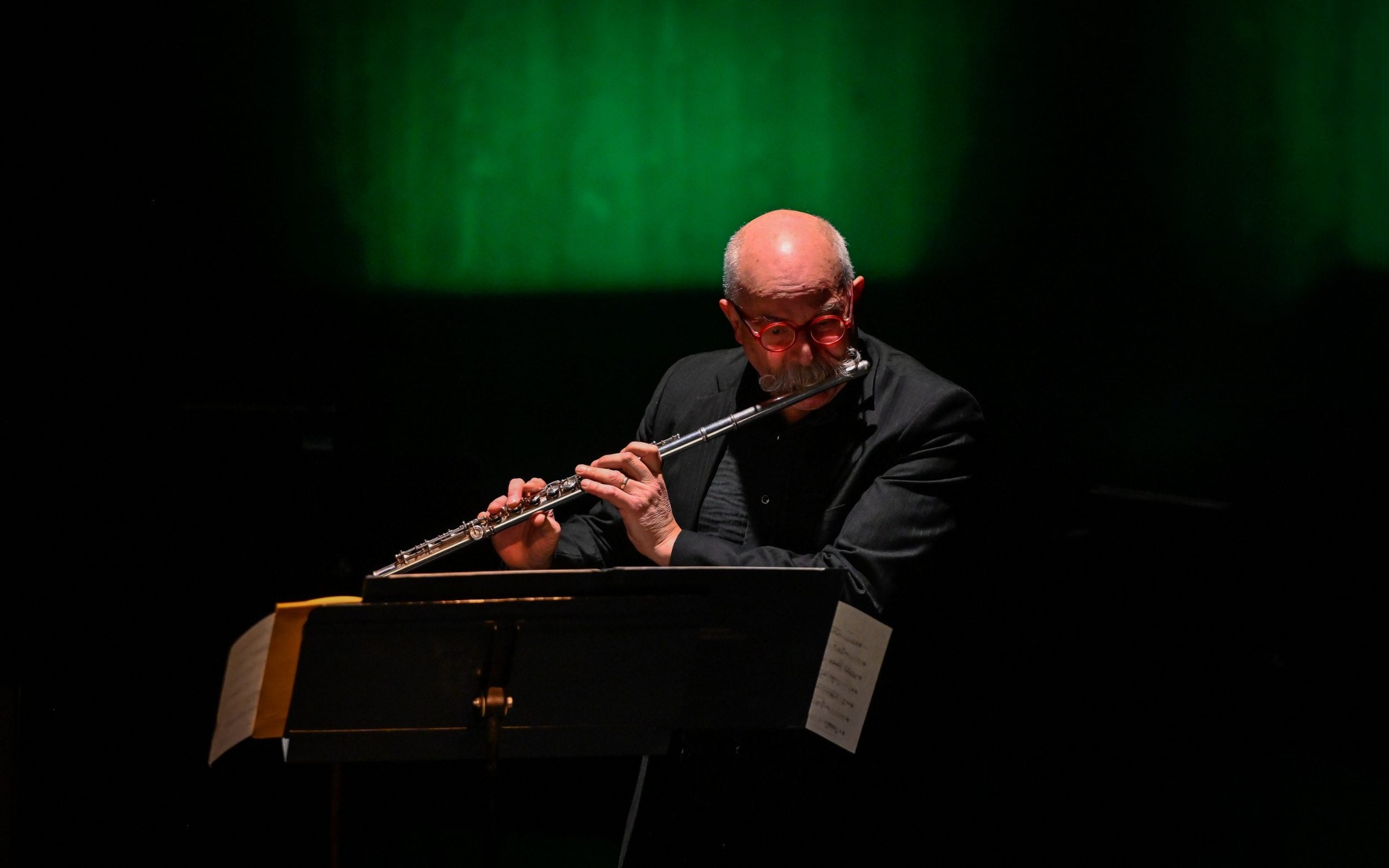
Displayed in between the pieces were little documentary clips of Takemitsu strolling in a Japanese garden and talking about the qualities he tried to capture in his music. One was Ma, the quintessentially Japanese concept of the void between things that makes those things more intensely real. The players had clearly taken this idea to heart, as the silences between Takemitsu’s muffled, French-flavoured sounds were full of electricity—though the most riveting example of Ma came between the tiny sounds of Three Little Pieces for cello and piano by Austrian composer Anton Webern, played by pianist Rolf Hind and cellist Tim Gill with reverent care.
In the pieces inspired by water – another of Takemitsu’s obsessions – the music seemed to bend and ripple. In Rain Spell Helen Tunstall’s weirdly mistuned harp notes melded into David Hockings’s vibraphone ripples, which in turn dissolved into Hind’s muffled piano chords. That watery effect is suggested in Takemitsu’s notes, but it takes wonderful performers like these to make it really come to life.
The evening wasn’t all quiet and stillness. The unexpected violence in nature sometimes showed itself, in the hectic twitterings of Olivier Messiaen’s La Merle Noir (The Blackbird), and the harp strummings of Helen Tunstall in Takemitsu’s And then I knew ‘twas wind. “Composers should be instigators, they should restore expressiveness to the world,” we heard Takemitsu say, and for the short space of this concert he and the Sinfonietta achieved it.
Info: londonsinfonietta.org.uk
Play The Telegraph’s brilliant range of Puzzles – and feel brighter every day. Train your brain and boost your mood with PlusWord, the Mini Crossword, the fearsome Killer Sudoku and even the classic Cryptic Crossword.
